02 — Heritage
The seven gates
The accounts of Takht Hazara all repeat one detail: seven doors set around a circle of roughly eighty kilometres, with two of them — Takht Hazara and Takht Mahal — named as the great gates. Local tradition at Raheem pur keeps the same count of seven and names the second gate Mughal Ranjha.
No physical gate stands today. The seven doors survive as a tradition and as place-names, not as masonry. The naming below is the local reading of that tradition, laid out in compass order — useful for signage, for the flag and for the map, and honest about being a reconstruction.
-
I
Raheem pur Darwaza
North
The principal gate. The road down from Sargodha enters the circle here.
-
II
Mughal Ranjha Darwaza
North-east
Named in the old account as the second of the two great doors of the circle.
-
III
Chenab Darwaza
East
Opens onto the river, about two kilometres out across the bank.
-
IV
Mahiwal Darwaza
South-east
Toward Mahiwal and the lower kaddhi villages along the water.
-
V
Thati Darwaza
South
Toward Thati Kalan.
-
VI
Midh Darwaza
South-west
Toward Midh Ranjha, and the banyan that stands beside it.
-
VII
Kaddhi Darwaza
West
The farm gate, out onto the wheat and the kinnow orchards.
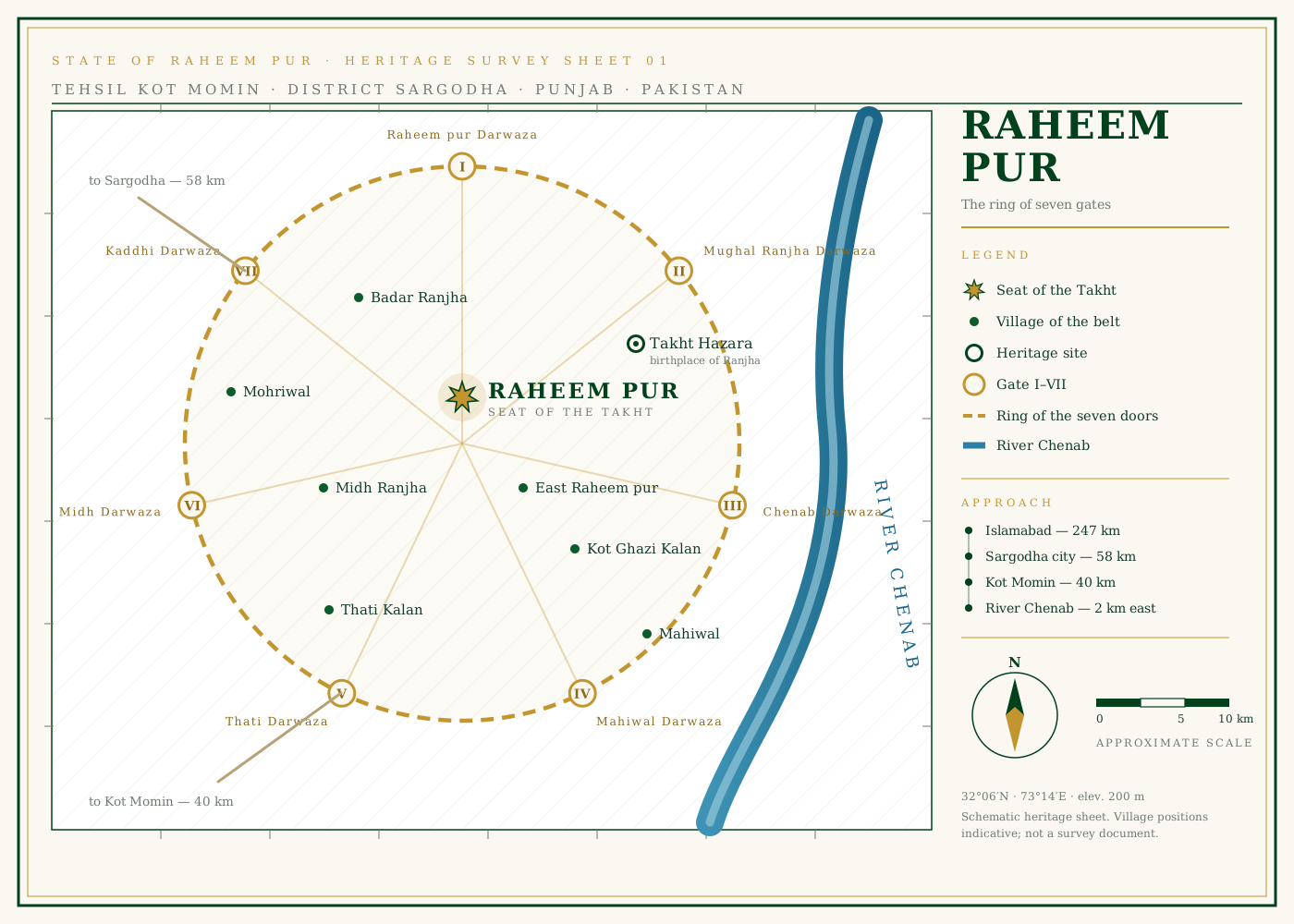
The ring, drawn
Seven gates evenly set on the ring, seven roads running in to the seat of the takht. Positions are indicative — this is a heritage drawing, not a survey.
Standing heritage of the belt
The old mosque of Mian Ranjha
Recorded at Takht Hazara in the cultural heritage of the town; its remains still stand.
The shrine of Shah Shamuddin
A Mughal-era spiritual figure who lived here; district accounts also record the tomb of a Mughal faqir at the site.
The small-brick houses
Buildings of ancient small bricks survive in the old town, with craftsmanship on the walls that is steadily being lost.
The banyan at Midh Ranjha
The largest and oldest banyan tree in Pakistan stands near Midh Ranjha — over a thousand roots, covering some three acres.